
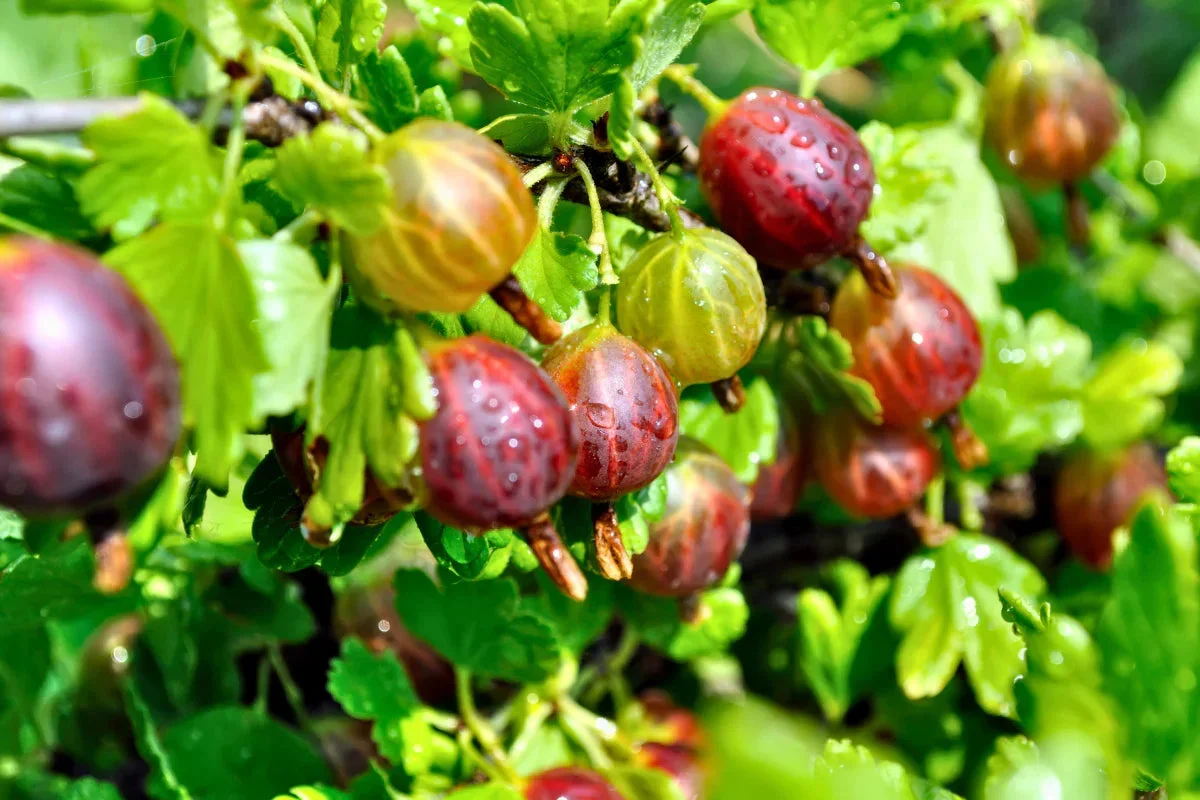
Gooseberries earn space through generous crops and a compact habit, but their thorns make every cramped centimetre noticeable. A gap that seems adequate around a young bush shrinks as branches arch under fruit, weeds fill the edge, and protective netting narrows the route used for pruning and picking.
Layout should therefore begin with people as well as plants. The gardener needs to reach the centre, carry a bowl along the row, inspect leaves, secure protection, and remove old wood without leaning through a neighbouring crown.
A soft-fruit specialist from ChrisBowers starts a gooseberry plan by tracing the picking route before marking planting holes. The specialist explains that mature spread, thorn direction, access from both sides, and the width of any netted enclosure matter more than the neat appearance of newly planted bushes. They advise leaving clear hand and forearm space around fruiting branches, keeping paths firm enough for wet harvest days, and positioning supports where they do not become hidden hazards. Air movement is important, but generous spacing alone does not replace selective pruning that opens the centre and removes low, congested wood. The specialist also highlights that permanent cages need doors wide enough for containers and tools, with edges that do not force the picker against thorns. These practical checks should be made before gardeners compare gooseberry bushes for sale, because cultivar habit and final training form only become useful when the allocated space remains workable at harvest.
A good plan can be tested without a plant in the ground. Mark mature outlines, walk the intended path with a basket, and imagine netting, wet foliage, and laden branches occupying the same space at the busiest point of summer.
Draw the Harvest Route Before the Planting Row
Picking requires repeated movement, two free hands, a container, and a view into the bush, all while ripe fruit and thorns occupy the path edge; the visible detail is therefore linked to the process behind it before tools or materials enter the discussion.
Summer rain leaves grass and soil slippery, so British harvest access needs a firm surface and room for careful footing; short weather windows reward preparation, but they do not justify work when the tree or ground is unsuitable.
A proportionate response is to mark a route from gate or kitchen to both sides of the row and test it with the container normally used for harvest; the action has a defined purpose, a visible review point, and a sensible reason to stop.
Include turning space at row ends and keep hoses, cage anchors, and low supports outside the natural line of travel; attaching the check to a familiar route makes subtle change more likely to be noticed during a busy week.
Problems become harder to interpret after measuring only centre-to-centre plant spacing and forgetting that bodies, baskets, and branches share the remaining gap; the apparent solution therefore creates a second problem beside the one it was meant to address.
Fruit can be picked without crushing branches, catching clothing, or abandoning the shaded centre because it is unreachable; future work begins from a sounder structure, clearer evidence, and fewer inherited maintenance problems.
Good judgement in gooseberry layout comes from several modest signals rather than one dramatic clue; for gooseberry layout, soil, access, growth, weather, and timing should support the same explanation before an intervention becomes larger or difficult to reverse.
Match Spacing to Mature Habit and Pruning Form
A compact upright cultivar, a spreading bush, and a trained cordon use space differently even when supplied at a similar young size; this gives the later decision a clear baseline instead of relying on one attractive or alarming moment.
Fertile moist soils often produce stronger extension than dry ground, while partial shade encourages shoots to reach sideways for light; the same nominal month can describe very different plant conditions between a sheltered town garden and an exposed plot.
A useful margin is part of gooseberry layout, not wasted effort; in gooseberry layout, it allows for a heavier crop, a drier month, or a missed inspection and keeps correction possible without dismantling work that is already performing well.
The next deliberate move is to combine expected mature spread with the intended pruning system and retain a working gap after both plants reach full leaf; the sequence makes follow-up straightforward and leaves the cause of any improvement easier to identify.
Spacing supports healthy growth and practical pruning without depending on severe yearly cuts to rescue an overcrowded plan; the result is understandable to another gardener and does not depend on unusually favourable conditions.
The most misleading response is reducing distance because annual pruning is expected to keep every cultivar within an unrealistically narrow outline; the tree loses useful options while the gardener gains little dependable information in return.
Observe neighbouring established gooseberries where possible and allow extra room where vigour or access is uncertain; keeping the inspection reachable ensures that good intentions survive wet days, holidays, and competing tasks.
Keep Thorns Away From Shared Paths
Arching fruiting branches move lower and farther under crop weight, placing thorns beyond the tidy winter outline used during planning; the first conclusion remains deliberately modest, leaving enough evidence for a proportionate response.
The shortcut to avoid is planting at the path edge and assuming occasional pruning will prevent all summer growth from catching sleeves or skin; resisting the assumption keeps observation, intervention, and outcome connected in the right order.
Small gardens often use the same route for bins, washing, tools, and play, increasing contact during the gooseberry season; aspect, shelter, soil, and recent rainfall need to be read together before the timing is judged.
Progress depends on choosing to set bushes back from narrow routes and direct retained branches into a picking zone that does not intrude on everyday circulation; the action has a defined purpose, a visible review point, and a sensible reason to stop.
Taken together, this part of gooseberry layout links timing with plant response and access; within gooseberry layout, the aim is not a flawless appearance, but a result stable enough to observe and modest enough to correct if later evidence changes the judgement.
Check the route at arm height and child height, and remove low crossing growth before fruit weight pulls it farther outward; attaching the check to a familiar route makes subtle change more likely to be noticed during a busy week.
Productive branches remain accessible without turning a frequently used path into an avoidable source of scratches and damage; this protects the original purpose of the planting while leaving room for small later adjustments.
Build Airflow With Pruning as Well as Distance
Open ground between bushes does little for airflow inside a dense crown where old branches, low shoots, and soft growth overlap; this turns a broad instruction into a condition that can be checked again after growth or weather changes.
The assumption that deserves resistance is using wide spacing as permission to leave every internal shoot, which creates a humid core that remains difficult to inspect; the apparent solution therefore creates a second problem beside the one it was meant to address.
Inspect leaf undersides and inner shoots from the planned path, confirming that pruning has preserved visibility as well as air movement; keeping the inspection reachable ensures that good intentions survive wet days, holidays, and competing tasks.
Spacing and branch renewal work together, creating a crown that dries, ripens, and reveals problems before they spread; the benefit remains visible after the immediate concern has passed and routine care resumes.
Gooseberry mildew and sawfly concerns make early observation valuable during damp or rapidly warming British springs; a review after the next meaningful spell of weather is more useful than treating the whole season as uniform.
The sound intervention is to retain a clear centre or structured framework appropriate to the form, removing congested and ground-touching wood at suitable times; the sequence makes follow-up straightforward and leaves the cause of any improvement easier to identify.
There is also a household test for gooseberry layout: the arrangement has to work on wet days, during harvest pressure, and when a routine check is delayed; a gooseberry layout plan that survives only an ideal weekend is not yet a practical one.
Design Netting Around Doors, Edges, and Reach
Bird protection changes the usable width of a bed and introduces doors, clips, roof height, and edges that affect every maintenance visit; read in sequence, the observation keeps cause and symptom from being folded into the same assumption.
A useful course of action is to size the enclosure for mature bushes and a standing picker, then place a wide entrance on the firmest and most direct route; the action has a defined purpose, a visible review point, and a sensible reason to stop.
A later review of gooseberry bushes for sale should compare mature habit, thorniness, cropping position, and suitability for the support and access pattern already planned.
Later correction is often created by draping loose netting directly over thorny branches, where it tangles with shoots and traps birds as fruit begins to colour; the tree loses useful options while the gardener gains little dependable information in return.
Wind and snow test lightweight frames, while summer growth quickly fills small cages designed around dormant plants; local observation should therefore carry more weight than a date copied unchanged from a national calendar.
Secure lower edges, make the closure obvious, and inspect for gaps or trapped wildlife each time the crop is visited; attaching the check to a familiar route makes subtle change more likely to be noticed during a busy week.
Across a complete season, gooseberry layout moves from preparation to observation and then to review; in gooseberry layout, keeping those stages distinct prevents every new symptom from reopening the entire decision and helps each action answer a question established beforehand.
Protection reduces losses without making watering, pruning, weeding, and humane daily inspection awkward or unsafe; the outcome supports the current season without borrowing strength, access, or flexibility from the next one.
Test the Layout at Full Crop and in Renewal Years
A productive bush changes shape under fruit, while renewal pruning temporarily changes where new shoots and later crops occupy space; its value lies in separating what the gardener sees now from what still needs to be confirmed.
The long view of gooseberry layout separates permanent choices from seasonal responses; within gooseberry layout, position and structure deserve caution, while small adjustments remain available as growth, crop weight, and ordinary weather test the original plan.
Harvest timing overlaps holidays and wet spells, so a layout should tolerate several days of growth and ripening between visits; the decision belongs to the actual site, where ordinary variation is part of the evidence rather than an inconvenience.
The avoidable weakness in the plan is judging the plan only after winter pruning, when leafless upright branches conceal the summer volume and weight of the plant; resisting the assumption keeps observation, intervention, and outcome connected in the right order.
The decision becomes workable when gardeners review branch spread at peak crop, note the hardest picking points, and adjust future renewal cuts to preserve a reachable framework; the sequence makes follow-up straightforward and leaves the cause of any improvement easier to identify.
Photograph the row from both ends at flowering, full leaf, and harvest, using the images to refine ties, paths, and protection; keeping the inspection reachable ensures that good intentions survive wet days, holidays, and competing tasks.
The planting remains comfortable through mature cropping and branch replacement, not merely during its open first season; the tree, site, and household routine finish in better agreement than a short-term cosmetic answer provides.
The row should be reviewed with the final bowl of fruit, not only with a tape measure in winter. Picking time reveals where sleeves catch, which branches hide fruit, whether the door admits a full container, and where feet compress wet soil. Those observations can guide renewal pruning, path repair, and minor support changes before the next crop. A layout that improves through use remains safer and more productive than one defended because its original spacing looked orderly when every bush was young and leafless.
